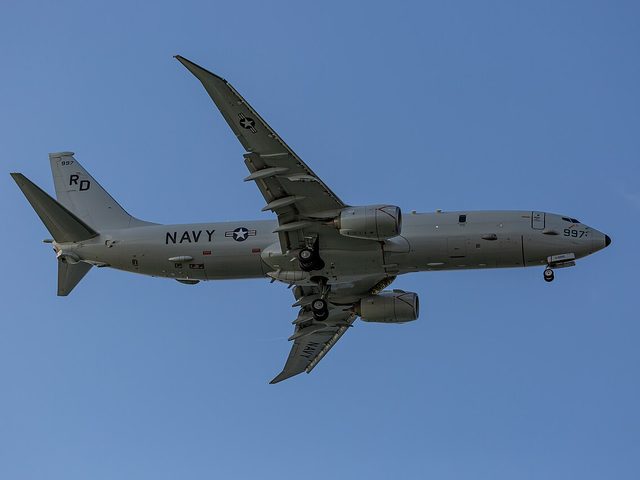
Boeing P-8 Poseidon
Twin Jet· 112 globally registered
The Boeing P-8 Poseidon is a military maritime patrol and anti-submarine warfare aircraft derived from the commercial 737-800 airframe, representing one of the most successful adaptations of a civilian airliner for military reconnaissance missions. Developed to replace the aging P-3 Orion, the P-8 entered service with the U.S. Navy in 2013 and has since been adopted by allied forces including Australia, India, the United Kingdom, Norway, South Korea, and New Zealand. Unlike its turboprop predecessor, the jet-powered Poseidon operates at higher altitudes and speeds, cruising around 490 knots at 41,000 feet, fundamentally changing maritime patrol doctrine by emphasizing rapid transit to patrol areas and sensor deployment rather than low-altitude visual search patterns. The aircraft carries advanced radar, electronic support measures, and acoustic sensors, along with weapons bays and hardpoints for torpedoes, depth charges, Harpoon anti-ship missiles, and other ordnance. Its military mission systems are integrated into what remains fundamentally a 737 fuselage, allowing Boeing to draw on commercial production efficiencies while meeting stringent military requirements. The P-8's operational ceiling of 41,000 feet exceeds most maritime patrol aircraft, and its unrefueled range of approximately 1,200 nautical miles on station (after a 1,200-nautical-mile transit) provides exceptional persistence over vast ocean areas. The type has proven its value in real-world operations, from tracking submarine activity in contested waters to participating in search-and-rescue missions and providing overwater surveillance during international exercises. SkyMeter has tracked 64 flights across 26 airframes and 1 operators over routes, with the largest observed operator.
Safety in context
The incident rate counts flights with ANY safety event detected by SkyMeter: go-arounds (a routine response, not a failure), unstable-approach gate flags (advisory thresholds), rejected takeoffs (the system working as designed), and runway events. It is NOT an accident rate or fatality rate. For accident statistics, refer to the NTSB Aviation Accident Database (USA) or the Aviation Safety Network. See methodology for what each event type measures.
Performance
Speed envelope & approach
Dimensions
Airframe geometry
Weight & identification
Operating limits
Top operators
By fleet size · last 7 days
No operator data available.
Safety profile
Flagged flights · last 7 days
Family
Related variants
Recent incidents
Flagged flights of P8


Recent flights
Real flights of P8 · airborne ≥ 20 min


